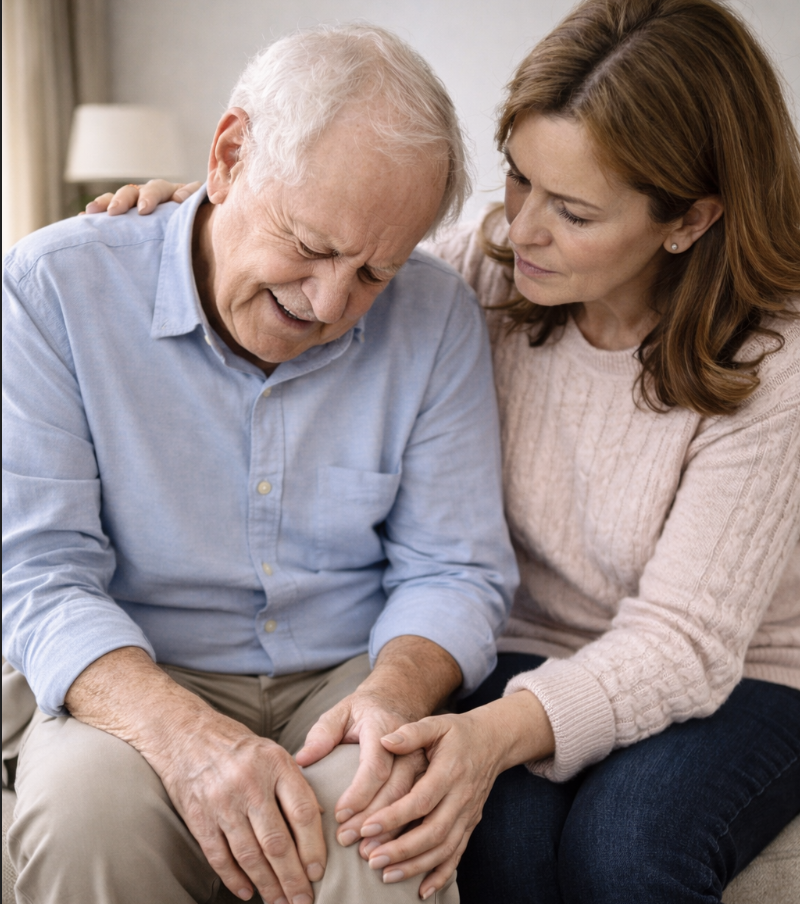
Loss is an inevitable part of life. Yet after the age of 70, grief often takes on a different texture. It is not simply the sadness of losing a loved one. It can feel heavier, more disorienting and more deeply intertwined with identity.
For many older adults, bereavement is not an isolated event. It may follow the loss of a spouse, siblings, lifelong friends or even adult children. Each loss compounds the previous one. Over time, grief can reshape daily routines, social circles and the sense of purpose that once anchored everyday life.
Understanding how grief evolves in later life is essential for families who want to offer meaningful support.
Why Grief After 70 Feels Different
Find YOUR ideal care home NOW!
Grief in later life often carries additional layers beyond emotional pain. After 70, loss frequently coincides with major life transitions such as retirement, health decline or reduced mobility. The absence of a partner or close friend may disrupt decades of shared habits and mutual support.
There is also the reality of cumulative loss. Older adults may experience multiple bereavements within a relatively short period. This repeated exposure to loss can intensify vulnerability.
The following table outlines how grief after 70 often differs from grief earlier in adulthood.
| Aspect of Grief | Earlier Adulthood | After 70 |
|---|---|---|
| Social Network | Broader support circle | Smaller, shrinking social circle |
| Daily Structure | Work and active routines remain | Loss may disrupt entire lifestyle |
| Identity Impact | Multiple active roles maintained | Loss may affect primary identity |
| Physical Resilience | Higher energy and coping reserves | Reduced stamina and health vulnerabilities |
| Future Perspective | Longer forward-looking horizon | Heightened awareness of mortality |
These differences help explain why grief in later life can feel particularly destabilising.
The Emotional Complexity of Bereavement in Older Age
After decades of shared experience, losing a spouse or lifelong companion often means losing daily companionship, practical support and emotional intimacy simultaneously. It may feel as though part of one’s personal history has vanished.
Grief at this stage can also trigger existential reflection. Questions about meaning, legacy and mortality may surface more prominently. This can deepen introspection and, in some cases, anxiety.
Unlike earlier life stages, older adults may hesitate to burden family members with their sadness. As a result, grief can become internalised and less visible, even when profoundly felt.
Physical and Cognitive Effects of Grief After 70
Grief is not solely emotional. It affects sleep, appetite and immune function. In individuals over 70, these physical effects can be more pronounced. Persistent fatigue, weight changes and increased vulnerability to illness are common.
Cognitive symptoms such as forgetfulness or reduced concentration may also appear during intense mourning. These changes are often temporary but can cause additional concern for families who fear cognitive decline.
Recognising that grief can temporarily alter behaviour prevents misinterpretation.
When Grief Becomes Complicated
While grief is a natural response to loss, prolonged or severe symptoms may indicate complicated grief or depression. Warning signs include persistent hopelessness, social withdrawal, refusal to engage in daily activities, or expressions of wanting to give up.
Distinguishing between normal mourning and clinical depression is important. If sadness remains intense and unrelenting months after the loss, professional assessment may be appropriate.
Early support can prevent emotional isolation from evolving into long-term decline.
Supporting an Older Adult Through Grief
Support begins with presence rather than solutions. Encouraging open conversation about memories and emotions helps validate the experience. Avoiding phrases that minimise the loss, such as suggesting the person “lived a full life,” preserves emotional dignity.
Maintaining gentle structure in daily routines can stabilise mood. Encouraging manageable social interaction, without pressure, helps prevent isolation.
Professional counselling tailored to older adults can also provide structured coping strategies.
Above all, recognising that grief after 70 carries unique dimensions allows families to respond with empathy rather than impatience.
FAQ – Grief in Later Life
Is grief more intense after 70?
It can be. After 70, losses often involve long-term partners and coincide with reduced social networks, which can intensify emotional impact.
How long does grief last in older adults?
There is no fixed timeline. However, if intense sadness persists for many months without improvement, professional evaluation may be beneficial.
Can grief cause physical health problems?
Yes. Grief can affect sleep, appetite, immune function and overall physical resilience, especially in older adults.
How can I help a parent grieving after 70?
Offer consistent presence, encourage conversation, maintain routine and seek professional support if withdrawal or depressive symptoms emerge.
When should I seek medical advice?
If grief is accompanied by persistent hopelessness, significant weight changes, sleep disruption or expressions of despair, consult a GP.
Need help finding a care home?
Senior Home Plus offers free personalized guidance to help you find a care facility that suits your health needs, budget, and preferred location in the UK.
Call us at 0203 608 0055 to get expert assistance today.
You are looking for a care home or nursing home for your loved one ?
Get our support
Share this article :
Latest posts










You are looking for an establishment for your loved one ?
Get availability & prices
Fill in this form and receive
all the essential information
We would like to inform you of the existence of the opposition list for telephone canvassing.
